
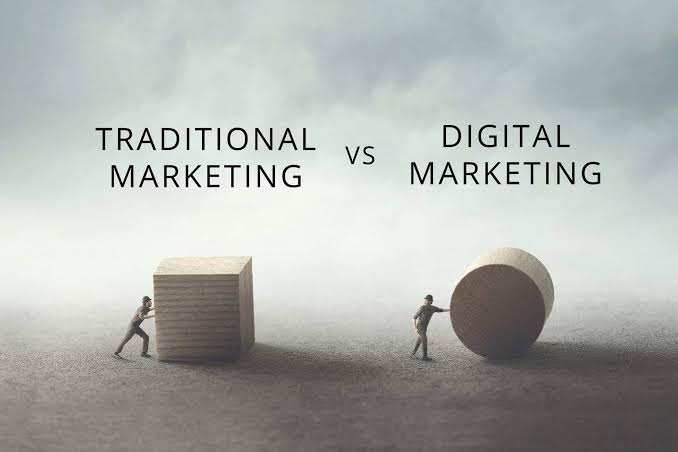
The marketing landscape has undergone a dramatic transformation over the past two decades. Businesses that once relied heavily on newspapers, television commercials, radio advertisements, brochures, billboards, and direct mail are now investing significantly in digital platforms. The shift is not merely a trend, it is a strategic response to changing consumer behavior, technological advancements, and the need for measurable business outcomes.
Today, consumers spend a substantial portion of their time online, researching products, comparing prices, reading reviews, watching videos, and engaging with brands on social media before making purchase decisions. As a result, companies are increasingly redirecting their marketing budgets from conventional channels to digital marketing to remain competitive and relevant.
Understanding Conventional Marketing
Conventional or traditional marketing refers to promotional activities conducted through offline channels, including:
- Newspapers and magazines
- Television advertisements
- Radio commercials
- Outdoor billboards
- Flyers and brochures
- Trade shows and exhibitions
- Direct mail campaigns
While these methods have helped build successful brands for decades, they often involve high costs, limited audience targeting, and difficulty in measuring return on investment (ROI).
While these methods have helped build successful brands for decades, they often involve high costs, limited audience targeting, and difficulty in measuring return on investment (ROI).
Why Businesses Are Embracing Digital Marketing
1. Consumers Have Become Digital-First
Modern consumers begin their buying journey online. Whether purchasing a smartphone, booking a hotel, selecting a university, or hiring a consultant, customers typically search online before making a decision.
Search engines, social media platforms, online reviews, and video content have become trusted sources of information, making digital visibility essential for businesses.
2. Digital Marketing Delivers Better ROI
One of the biggest advantages of digital marketing is its ability to measure performance in real time.
Businesses can track:
- Website traffic
- Lead generation
- Conversion rates
- Customer acquisition cost
- Return on advertising spend
- Customer lifetime value
Unlike traditional advertising, where measuring effectiveness can be challenging, digital campaigns allow marketers to optimize strategies based on actual performance data.
3. Precision Targeting
Traditional advertising reaches a broad audience, many of whom may have little interest in the product or service.
Digital marketing enables businesses to target audiences based on:
- Age
- Gender
- Location
- Interests
- Occupation
- Income
- Search behavior
- Purchase intent
This precision significantly improves marketing efficiency and reduces wasted expenditure.
4. Cost-Effective Marketing
Digital marketing allows even small businesses and startups to compete with larger organizations.
Instead of investing heavily in television or print advertising, companies can reach qualified prospects through:
- Search Engine Optimization (SEO)
- Google Ads
- Social Media Marketing
- Email Marketing
- Content Marketing
- Video Marketing
These channels often deliver better results at a fraction of the cost of conventional media.
Statistics That Highlight the Shift
Several recent studies demonstrate how rapidly businesses are moving toward digital marketing:
- The global digital advertising market was valued at approximately USD 567.9 billion in 2025 and is projected to exceed USD 1.69 trillion by 2033, reflecting sustained double-digit growth.
- Industry forecasts indicate that more than 82% of worldwide advertising expenditure is expected to come from digital channels by 2030, illustrating the long-term shift away from traditional media.
- In India, digital advertising spending has continued to grow rapidly, with industry estimates indicating annual growth of around 17%, significantly outpacing traditional media growth.
- India’s advertising industry has crossed the ₹1 lakh crore milestone, with digital media accounting for about 46% of total advertising expenditure, making it the country’s largest advertising segment.
These figures clearly demonstrate that businesses increasingly recognize digital marketing as a primary driver of growth.
Key Advantages of Digital Marketing
Global Reach
A local business can now attract customers from across the country or even internationally through an effective digital strategy.
Real-Time Analytics
Businesses can instantly monitor campaign performance and make informed decisions using platforms such as Google Analytics and advertising dashboards.
Better Customer Engagement
Digital platforms encourage two-way communication through comments, reviews, live chat, email, and social media interactions, helping brands build stronger customer relationships.
Faster Decision-Making
Marketing campaigns can be launched, modified, paused, or optimized within minutes based on market response.
Personalization
Artificial Intelligence and marketing automation allow businesses to deliver personalized content, recommendations, and offers tailored to individual customer preferences.
Is Traditional Marketing Becoming Obsolete?
Not entirely.
Traditional marketing still plays an important role in sectors such as luxury goods, real estate, political campaigns, public awareness initiatives, and large-scale brand building. Television, print, and outdoor advertising continue to create credibility and mass awareness.
However, leading organizations are increasingly adopting an integrated marketing approach, combining traditional and digital channels to maximize effectiveness. Traditional media often creates awareness, while digital marketing nurtures prospects, generates leads, and measures conversions.
The Growing Role of Artificial Intelligence
Artificial Intelligence is transforming digital marketing through:
- Predictive analytics
- Automated customer support
- Personalized recommendations
- AI-generated content
- Smart audience targeting
- Marketing automation
Businesses that integrate AI into their marketing strategies are improving efficiency while delivering better customer experiences.
Conclusion
The transition from conventional marketing to digital marketing is no longer optional. It is a business necessity driven by changing consumer behavior, technological innovation, and the demand for measurable results.
Organizations that embrace digital marketing gain access to deeper customer insights, improved targeting, greater flexibility, and higher returns on investment. While traditional marketing continues to have its place, the future belongs to businesses that successfully combine data, technology, creativity, and customer-centric strategies.
As digital technologies continue to evolve, companies that invest in digital marketing today will be better positioned to build stronger brands, generate qualified leads, and achieve sustainable business growth in an increasingly competitive marketplace.
Leave a Reply