Digital marketing has transformed the way businesses communicate, engage, and build relationships with customers. What began as simple banner advertisements and email campaigns in the 1990s has evolved into a sophisticated ecosystem driven by data, automation, personalization, and artificial intelligence (AI).
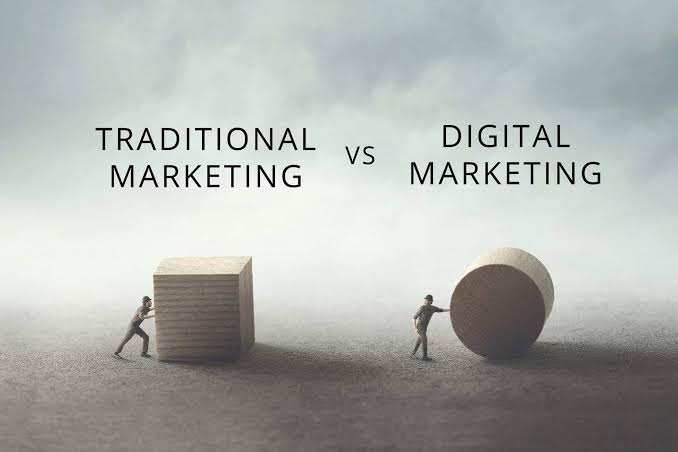
Today, digital marketing is no longer just an alternative to traditional marketing. It has become the primary growth engine for businesses across industries. As AI continues to reshape consumer behavior and marketing technologies, organizations must rethink their strategies to remain competitive in an increasingly digital world.
This article evaluates the evolution of digital marketing, examines its current strengths and limitations, and explores how Artificial Intelligence is shaping the future of marketing.
The Evolution of Digital Marketing
The Early Years (1990–2005)
The first phase of digital marketing focused primarily on establishing an online presence. Businesses created websites and used email marketing, banner advertisements, and search engines to reach customers.
The introduction of search engines such as Google fundamentally changed how consumers discovered information, giving rise to Search Engine Optimization (SEO) and Search Engine Marketing (SEM).
The Social Media Era (2005–2015)
The emergence of platforms such as Facebook, YouTube, LinkedIn, X (formerly Twitter), and Instagram revolutionized digital marketing.
Businesses shifted from one-way communication to two-way engagement by:
- Building online communities
- Sharing valuable content
- Running targeted advertisements
- Interacting directly with customers
Marketing became increasingly customer-centric rather than product-centric.
The Data-Driven Marketing Era (2015–2025)
The widespread adoption of smartphones, cloud computing, and analytics tools transformed digital marketing into a measurable business function.
Companies began using:
- Google Analytics
- Marketing automation platforms
- Customer Relationship Management (CRM) systems
- Predictive analytics
- Marketing dashboards
Instead of relying on assumptions, marketers started making decisions based on real-time customer data.
Evaluating Digital Marketing Today
Digital marketing has significantly improved business performance in several ways.
1. Highly Targeted Marketing
Unlike traditional advertising, digital marketing enables businesses to target audiences based on:
- Location
- Age
- Gender
- Interests
- Occupation
- Online behavior
- Purchase history
- Device usage
This precision reduces wasted advertising expenditure while improving conversion rates.
2. Measurable Performance
Every campaign can be evaluated using Key Performance Indicators (KPIs), including:
- Website traffic
- Click-Through Rate (CTR)
- Conversion Rate
- Cost Per Click (CPC)
- Return on Advertising Spend (ROAS)
- Customer Acquisition Cost (CAC)
- Customer Lifetime Value (CLV)
This level of accountability has made digital marketing one of the most measurable business functions.
3. Better Customer Engagement
Digital channels enable businesses to communicate continuously through:
- Social media
- Live chat
- Video marketing
- Mobile applications
- Online communities
Customers expect personalized experiences rather than generic advertisements.
4. Cost Efficiency
Digital marketing allows startups and small businesses to compete with larger organizations without massive advertising budgets.
SEO, content marketing, email marketing, and social media campaigns often generate long-term returns compared with many traditional advertising channels.
Challenges of Digital Marketing
Despite its advantages, digital marketing also faces several challenges.
Information Overload
Consumers are exposed to thousands of advertisements every day, making it increasingly difficult for brands to capture attention.
Privacy Regulations
Laws such as GDPR and evolving privacy standards are reducing access to third-party consumer data.
Rising Competition
Almost every business now invests in digital marketing, making customer acquisition increasingly expensive.
Constant Algorithm Changes
Search engines and social media platforms frequently update their algorithms, requiring marketers to adapt continuously.
Digital Marketing by the Numbers
The growth of digital marketing is supported by compelling industry data:
- The global digital advertising market was valued at approximately USD 567.9 billion in 2025 and is projected to exceed USD 1.69 trillion by 2033, highlighting the continued expansion of digital channels.
- Industry forecasts suggest that more than 82% of global advertising expenditure could come from digital media by 2030, reflecting the long-term shift away from traditional advertising.
- In India, digital media now accounts for about 46% of the country’s advertising expenditure, making it the largest advertising medium in the market.
These trends clearly indicate that digital marketing is becoming the dominant medium for customer acquisition and brand building.
The Rise of Artificial Intelligence in Marketing
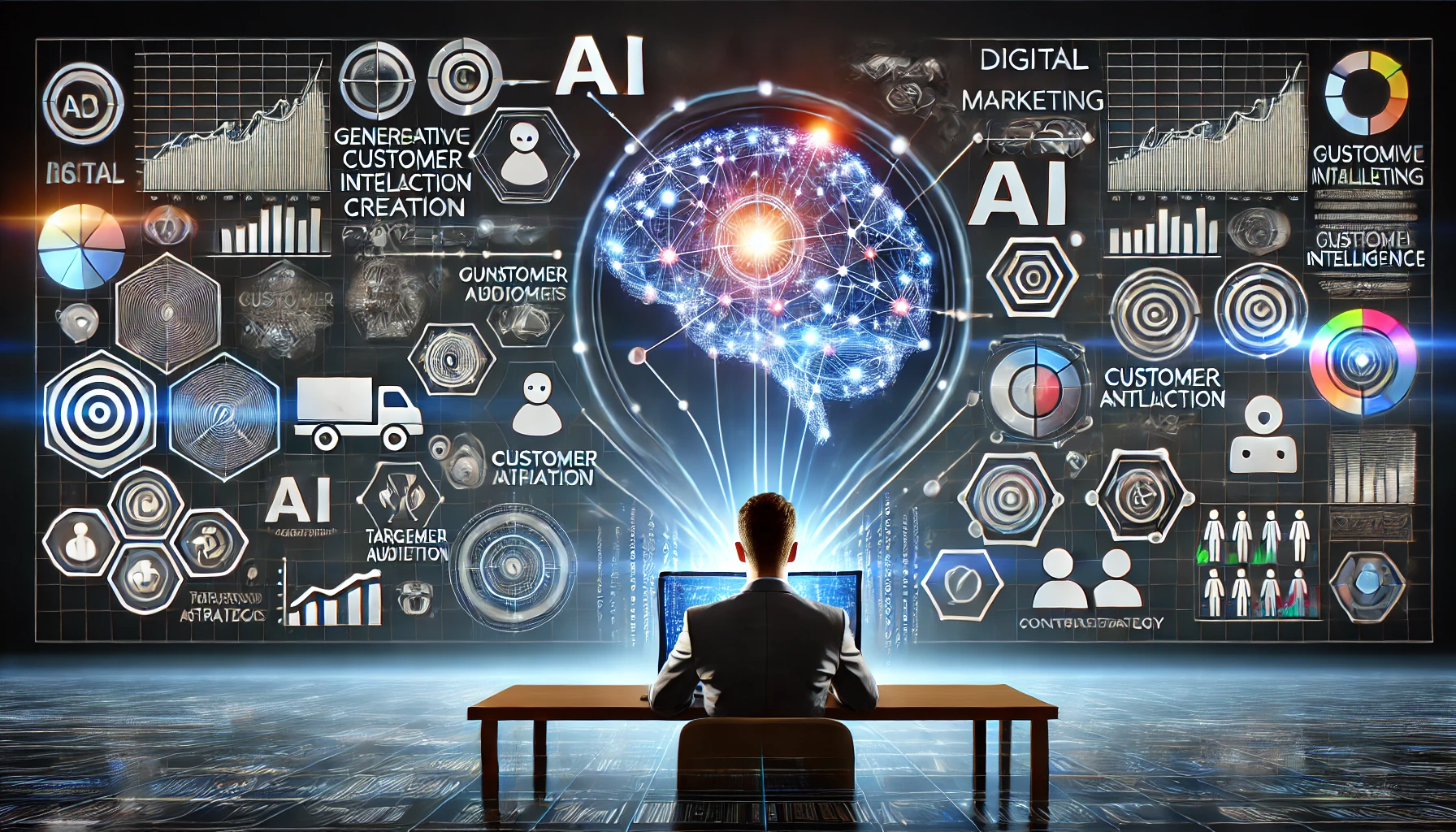
Artificial Intelligence has emerged as the most significant technological advancement in modern marketing.
AI enables machines to analyze vast amounts of customer data, identify patterns, predict behavior, and automate decision-making.
Rather than replacing marketers, AI is enhancing their ability to make faster and more informed decisions.
How AI is Transforming Digital Marketing
Intelligent Customer Segmentation
AI can automatically classify customers into highly specific audience groups based on behavioral patterns rather than simple demographic characteristics.
Personalized Marketing
Streaming services, e-commerce platforms, and online retailers already use AI to recommend products, movies, and services based on individual preferences.
Personalization improves both customer satisfaction and conversion rates.
AI-Powered Content Creation
Generative AI tools can assist marketers by producing:
- Blog drafts
- Product descriptions
- Email campaigns
- Advertisement copy
- Social media posts
- Marketing images
- Video scripts
Human expertise remains essential to ensure originality, strategic alignment, factual accuracy, and brand consistency.
Predictive Analytics
AI can forecast:
- Customer purchasing behavior
- Product demand
- Churn probability
- Campaign performance
- Sales trends
This allows organizations to make proactive marketing decisions.
Marketing Automation
AI automates repetitive activities such as:
- Email campaigns
- Lead nurturing
- Customer follow-ups
- Social media scheduling
- Chatbots
- Customer support
Automation improves operational efficiency while reducing costs.
AI-Powered Advertising
Major technology companies are integrating AI deeply into advertising platforms. For example, Meta has outlined plans to automate much of the advertisement creation, targeting, and optimization process using AI, allowing advertisers to focus more on business objectives than campaign execution.
The Future of Digital Marketing with AI
The next decade is expected to witness significant changes.
Hyper-Personalization
Every customer may receive unique advertisements, pricing, recommendations, and website experiences based on individual preferences and behavior.
AI Agents
AI assistants will increasingly research products, compare prices, negotiate purchases, and even complete transactions on behalf of consumers.
Marketing strategies will therefore need to optimize not only for human users but also for AI-driven buying assistants.
Generative Search
Traditional keyword-based SEO is evolving alongside AI-powered search experiences.
Businesses will increasingly optimize their content for AI-generated answers by emphasizing expertise, trustworthiness, structured data, and comprehensive content.
Voice and Visual Search
Consumers are increasingly using voice assistants and image-based search technologies, requiring marketers to rethink traditional SEO strategies.
Ethical AI
Organizations will need to ensure:
- Transparency
- Data privacy
- Responsible AI usage
- Fair algorithms
- Human oversight
Trust will become a critical competitive advantage.
Skills Future Marketers Must Develop
The marketers of tomorrow will need expertise in:
- Artificial Intelligence
- Data Analytics
- Prompt Engineering
- Marketing Automation
- Customer Experience Management
- SEO and AI Search Optimization
- Content Strategy
- Digital Advertising
- Business Intelligence
The future belongs to professionals who can combine creativity with analytical thinking and AI-powered tools.
Conclusion
Digital marketing has evolved from a communication channel into a strategic business function that drives customer acquisition, engagement, and long-term growth. Its strengths lie in precision targeting, measurable performance, scalability, and the ability to deliver personalized experiences.
Artificial Intelligence represents the next major evolution of this discipline. While AI is transforming content creation, advertising, analytics, and customer engagement, human creativity, ethical judgment, strategic thinking, and domain expertise remain indispensable.
The future of marketing will not belong to businesses that simply adopt AI. It will belong to organizations that integrate AI thoughtfully while preserving authenticity, innovation, and customer trust. Companies that successfully combine human intelligence with artificial intelligence will be best positioned to thrive in the rapidly evolving digital economy.